
RigWorks MCP server
Commit Nov 11, 2026Provides a human-readable, host-independent grammar for creative work that allows AI agents to author and validate structured JSON documents.
Also known as rigkid/RigWorks
- Stars
- 2
- Tools
- —
- Downloads, 30 days
- —
- Latest version
- —
- Last commit
- Nov 11, 2026
- License
- MIT
What is RigWorks MCP?
RigWorks provides a human-readable, host-independent grammar for creative work that allows AI agents to author and validate structured JSON documents.
Summary generated from the project's README
About RigWorks MCP server
Authoring and validating structured JSON documents for creative work is what RigWorks enables for AI agents and developers. By providing a host-independent grammar, it allows models to write data that remains readable by humans and interoperable across different applications without requiring specific libraries or runtimes. The system uses a shared vocabulary of schema ids and entity-component documents to ensure that content can move between different renderers or hosts.
Developers can connect AI clients like Claude or Cursor to the server to access the Contract over MCP. This connection provides access to specific tools such as list_schemas, get_schema, find_examples, validate_document, and get_skill. The server facilitates a workflow where an agent writes a document and a subsequent agent can immediately accept it because they both adhere to the same underlying grammar. Users can verify the integrity of any generated output using the rig-validate command to ensure strict compliance with the established schemas.
What you can do with it
- 1Enable cross-agent collaborationOne AI agent can produce a document that is immediately ready for another agent to process.
Written from the project's README. Every use case is checked against a quote from it.
README
View on GitHubRigWorks


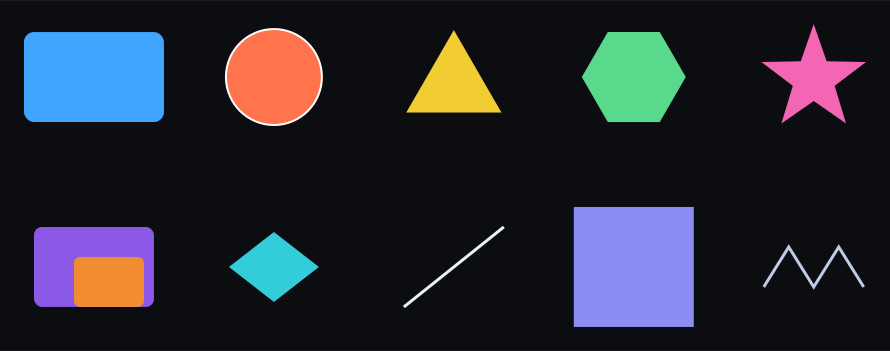
A shared grammar for real work.
Because no code is the best code.
Rig - Readable Independent Grammar.
RigWorks - Rig for short, and Rig in all running text - is a future-proof, host-independent, human-readable vocabulary for real work. Open the JSON, change a field, load it in another app. It is a framework you never install - no library to link, no runtime to embed, no API to version. It ships as agreement: a grammar of schema ids and entity/component POD documents. Apps that speak the same schema ids share fields and units, so their content interoperates without either app knowing the other exists.
It runs
A Rig document is not a diagram of a format. The same JSON presents in more than one fulfillment without either knowing the other:
- SVG -
examples/minimal-scene.jsondrawn bytools/render-svg.mjs(the picture at the top of this page) - RigViewer - presents: the still document, drawn. Open it - drop a
.jsonand look - RigPlayer - plays: the document over time (transport, animation, sound). Play one now - drop a
.rig, press play, share the link - RigKit - builds hosts: desktop / Pi reference host (GLFW, packs)
Any app that already has Setup / Update / Draw / Exit can honor the same schemas. Host-only fields stay in x.<vendor>.* extensions so they do not pollute the portable ones. Emitted documents pass rig-validate --strict.
Concept is more important than execution. What a transform is outlives every renderer that ever drew one. Rig keeps the concept and leaves the execution to you - design philosophy, why no code.
AI co-coding is here to stay. When execution gets cheap, the shared concept becomes the scarce asset. The cheapest token is the one the model never generates: it writes the document and leaves the system unwritten, and the next agent already accepts that document. Rig publishes the concept in a form people and models read the same way - AI collaboration.
What it costs. A data framework moves work rather than deleting it. Live hosts write the loop; nothing fails to build when you drift; a schema only pays off once a second host speaks it - the honest price.
For agents and editors. tools/rig-mcp serves the Contract over MCP (list_schemas, get_schema, find_examples, validate_document, get_skill) so Claude, Cursor, and peers call Rig directly. Editors get autocomplete and inline validation for .rig files from the published schemas - point json.schemas at https://rig.works/schemas/catalog.json (schemas/catalog.json); this repo's .vscode/settings.json shows the local form.
The framework
- Grammar - schema ids, field names, units, and entity/component POD composition. Enough to be Rig (honors).
- Schemas - agreed POD field layouts (prose + JSON Schema). Ship what you support.
- Properties - portable datatype rows.
- Live hosts - SUDE (Setup / Update / Draw / Exit) plus runtime ECS systems.
- Optional UI - Rig + UI editing the same data.
Words used precisely - Contract, fulfillment, host, pack: docs/terms.md.
Wire format is JSON (rig.document). Validate generated output:
npm run setup                                          # once - installs the validator
node tools/rig-validate/cli.js examples/minimal-scene.json
npm run check                                          # schemas, parity, links, reference documents
Worked example
Live hosts run a SUDE loop; portable content is ECS components on entities:
Setup: spawn / load entities
Update: simulate (modulators, transport, ...)
Draw: present
Exit: tear down
One entity in Contract JSON (examples/minimal-scene.json):
{
  "id": "demo-rect",
  "components": {
    "rig.meta.named": {
      "name": "demo-rect",
      "stableId": "demo-rect"
    },
    "rig.spatial.transform": {
      "position": [
        20,
        65,
        0
      ],
      "rotation": [
        0,
        0,
        0,
        1
      ],
      "scale": [
        1,
        1,
        1
      ]
    },
    "rig.spatial.relationship": {
      "parent": "world"
    },
    "rig.geometry.rectangle": {
      "x": 0,
      "y": 0,
      "width": 140,
      "height": 90,
      "cornerRadius": 10
    },
    "rig.paint.fill_stroke": {
      "fillRgba": [
        0.25,
        0.65,
        1,
        1
      ]
    },
    "rig.interact.selectable": {
      "enabled": true
    }
  }
}
More patterns: examples/. Interchange notes (.rig / .rigz): docs/interchange.md.
For AI agents
The cheapest token is the one the model never generates. Load the skill, copy one example, emit the document, and validate. Leave the schemas unloaded. A document one agent emits is data the next agent already accepts, so the handoff spends nothing on a private format. The reason: docs/ai-collaboration.md.
Load the condensed skill before generating Rig data: skills/generating-rig-documents/SKILL.md. Cross-agent onboarding: AGENTS.md. Discovery index: llms.txt.
Always validate emission:
node tools/rig-validate/cli.js path/to/doc.json
Reference host
RigKit fulfills Rig on desktop (GLFW / OpenGL / packs). The family lives under the rigkid org: RigWorks is the spec, RigKit is the reference host. RigKit's minimal demo presents the same scene shape family as examples/minimal-scene.json - the picture at the top of this page is that document drawn by the in-repo SVG fulfillment, tools/render-svg.mjs.
Version
See VERSION (SemVer) and docs/versioning.md.
More reading
| Why Rig | |
|---|---|
| docs/design-philosophy.md | Future-proof, host-independent, human-readable - the tablet |
| docs/why-no-code.md | Why a framework with no code, and what it costs |
| docs/ai-collaboration.md | Why shared concepts beat private prompts when models author work |
| Contract | |
|---|---|
| docs/terms.md | Contract, fulfillment, host, pack, POD |
| docs/honors.md | The minimum bar - is it Rig? |
| docs/ecs.md | Entity-component conventions |
| docs/sude.md | Setup / Update / Draw / Exit |
| docs/ui.md | Optional UI layer over the same data |
| docs/versioning.md | SemVer, maturity tiers, and the 1.0 freeze |
| docs/history.md | Release notes, one row per version |
| docs/gaps.md | Where the Contract is silent, ambiguous, or wrong |
| Data and exchange | |
|---|---|
| schemas/README.md | Catalog of schema ids |
| schemas/json/ | Machine grammar |
| schemas/document.md | Document envelope |
| docs/interchange.md | Wire format and .rig / .rigz package |
| docs/properties.md | Portable datatypes |
| examples/ | Reference documents |
| Format mappings | |
|---|---|
| docs/blender.md | Blender evaluated scene to existing spatial / mesh / render / animation schemas; encodings are fulfillment |
| docs/idml.md | IDML to rig.layout.frame + layout / story; encodings are fulfillment |
| docs/kicad.md | KiCad board to rig.circuit.* / rig.pcb.*; round trip merges onto the source file |
| docs/openbim.md | OpenBIM (IFC / BCF / IDS) to rig.bim.* |
| docs/pd.md | Pure Data and Max patches to rig.node.*; a .pd round trip merges onto the source file |
| docs/print.md | FGF / pellet to rig.print.*; not envelope pdfX, not a layout page |
| docs/spine.md | Spine skeleton JSON to existing animation / mesh schemas; encodings are fulfillment |
| docs/ufo.md | UFO / GLIF to rig.font.*; encodings are fulfillment |
| docs/usd.md | OpenUSD composed stage to existing spatial / mesh / render schemas; encodings are fulfillment |
| Domain mappings | |
|---|---|
| docs/dev.md | Dev machines to rig.dev.machine / rig.dev.op; fulfillments e.g. RigDev |
| docs/eurosynth.md | EuroSynth / Eurorack faceplates, jacks, and supply rails to rig.modular.* |
| docs/music.md | Tempo, key, chord, and part to rig.music.*; a voice to rig.synth.* |
| docs/records.md | Payments, encounters, catalog rows, and case files; encodings are fulfillment |
| docs/robot.md | Design, simulate, test, and train robots; solvers and trainers are fulfillment |
| docs/ros.md | ROS 2 to existing schemas; no rig.ros2.* |
| docs/vr.md | VR to rig.vr.* plus camera, transform, and input; runtimes are fulfillment |
| Working with models | |
|---|---|
| skills/generating-rig-documents/SKILL.md | The skill to load before generating |
| tools/ | Validator, parity, and link checks |
License
MIT - LICENSE.