
Ermöglicht es AI-Clients, Cloud-FinOps-Workflows wie Kostenoptimierung, Tagging, Budgetierung, Allocation und Reporting zu automatisieren.
Auch bekannt als openops-cloud/openops
- Stars
- 1.082
- Tools
- —
- Downloads, 30 Tage
- —
- Neueste Version
- —
- Letzter Commit
- 13. Nov. 2026
- Lizenz
- —
Was ist OpenOps MCP?
OpenOps ist ein MCP server. Ermöglicht es AI-Clients, Cloud-FinOps-Workflows wie Kostenoptimierung, Tagging, Budgetierung, Allocation und Reporting zu automatisieren.
Zusammenfassung generiert aus dem README des Projekts
Über OpenOps MCP server
OpenOps ermöglicht es FinOps-Teams, Engineers und Finanzabteilungen, Cloud-Finanzoperationen und Workflows zur Kostenoptimierung zu automatisieren. Die Plattform verbindet sich direkt mit den großen Cloud-Providern wie AWS, Azure und Google Cloud, um Budgetierung, Tagging und Resource Allocation zu verwalten. Sie schließt die Lücke zwischen der Identifizierung von Einsparpotenzialen und deren tatsächlicher Umsetzung durch automatisierte Aktionen.
Nutzer können dies als Managed Cloud Service oder via docker-compose Installation für lokale oder Cloud-basierte Umgebungen bereitstellen. Das System umfasst OpenOps Tables für eine Excel-ähnliche Datenverwaltung und OpenOps Analytics zur Visualisierung. Es verfügt über einen No-Code-Workflow-Editor, der individuelle Automatisierungen ermöglicht und gleichzeitig Human-in-the-loop-Steuerungen bietet, um sicherzustellen, dass kritische Approvals über verschiedene Kommunikationskanäle abgewickelt werden. Jede Aktion bleibt durch Versionierung und Logs nachvollziehbar, um die Übersicht über alle automatisierten Cloud-Änderungen zu behalten.
Was du damit machen kannst
- 1Cloud-Kostenoptimierung automatisierenLass die AI vorgefertigte Workflows ausführen, um Cloud-Ausgaben zu senken und ungenutzte Ressourcen zu verwalten.
- 2Menschlich genehmigte Automatisierung implementierenRichte Workflows ein, die eine manuelle Bestätigung erfordern, bevor kritische Infrastruktur-Änderungen durchgeführt werden.
- 3Multi-Cloud-Umgebungen verbindenFasse Optimierungsmöglichkeiten verschiedener Provider in einer einzigen Management-Oberfläche zusammen.
Geschrieben aus dem README des Projekts. Jeder Use Case wurde gegen ein Zitat daraus geprüft.
Automatisierte Checks
Geluften am 14. Nov. 2026Vollständiger Bericht →Noch nicht verifiziert. Ein Server benötigt einen Score von 80, keine kritischen Befunde und genug Daten für unsere Prüfung. Wie die Checks funktionieren · Was du für mehr Punkte verbessern kannst

- Source Repository verknüpft und erreichbaropenops-cloud/openops is public and reachablegithub.com/openops-cloud/openops ↗Bestanden
- Paket nennt dieses Repository als QuelleNicht geprüft
- Build-Provenienz (Sigstore-Attestierung)Nicht geprüft
- Open Source Lizenz (OSI)No licenseBefund
- Commit oder Release im letzten JahrLast commit or release 2026-11-13github.com/openops-cloud/openops ↗Bestanden
- OpenSSF ScorecardNicht geprüft
- Package-Name ähnelt keinem populären PackageNicht geprüft
- Keine kritischen Advisories im Paket oder seinen AbhängigkeitenNicht geprüft
- Keine versteckten Anweisungen an das Modell0 tool descriptions and the README read; no override phrases, credential paths or hidden charactersBestanden
- Destruktive Tools sind markiertNicht geprüft
- Remote-Endpoint beantwortet den MCP-HandshakeNicht geprüft
README
Auf GitHub ansehenOpenOps





😎 What is OpenOps?
OpenOps is a No-Code FinOps automation platform that helps organizations reduce cloud costs and streamline financial operations.
It provides customizable workflows to automate key FinOps processes like allocation, unit economics, anomaly management, workload optimization, safe de-provisioning and much, much more.
It also comes bundled with its own Excel-like database (OpenOps Tables) and its own visualization system (OpenOps Analytics).
At the same time, OpenOps enables collaboration between FinOps teams, engineers, DevOps, finance, and leadership, ensuring that cost-saving measures are not just identified but effectively implemented.
OpenOps integrates seamlessly with major cloud providers, many third-party FinOps tools, various communication platforms and a handful of project management tools.
🏁 Just want to get started? Click here.
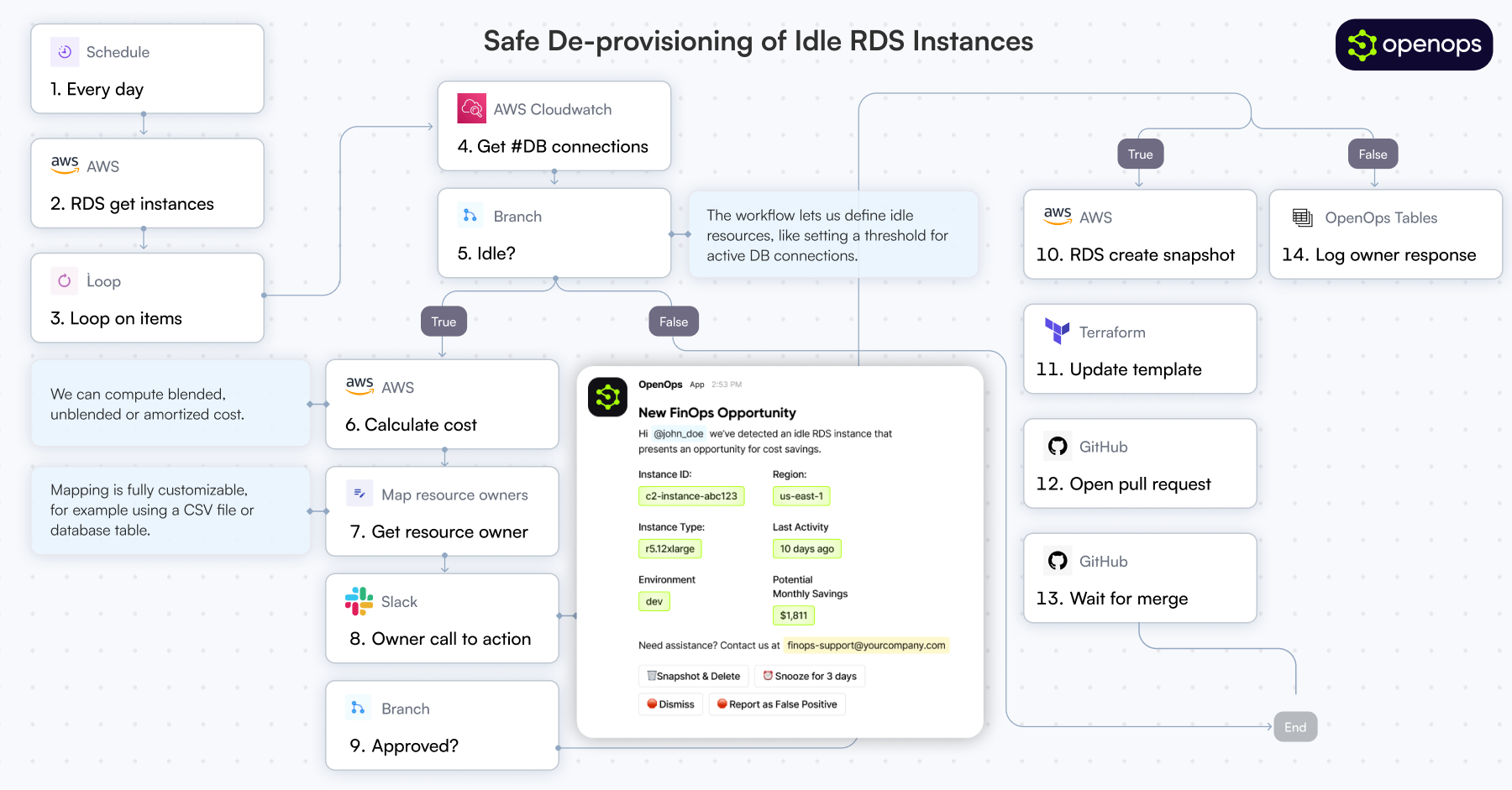
🚀 Key Features
- Pre-Built FinOps Workflows – A library of best-practice workflows designed with input from FinOps leaders. Covers cost optimization, tagging, budgeting, allocation, and reporting.
- No-Code Experience – Approachable for non-technical practitioners, but allows "dropping into" code when needed.
- Flexible Workflow Editor – Use OpenOps's dedicated No-Code editor to build workflows from scratch or customize existing ones.
- Deep Integrations – OpenOps natively connects with cloud providers, databases, analysis tools, communication platforms, and project management systems.
- Human-in-the-Loop Controls – OpenOps comes with HITL controls - across multiple channels - for critical approval workflows.
- Workflow Versioning & Traceability – Test workflow steps, maintain workflow versions, and track every action inside a workflow with logs.
- Centralized Management – Log and process opportunities with tables that allow approvals, dismissals, false-positive marking, and snoozing.
🌟 Why OpenOps?
FinOps practitioners struggle with visibility tools that surface cost-saving opportunities but lack implementation capabilities. Traditional automation tools, whether custom-built or off-the-shelf, fail to balance flexibility and maintainability.
OpenOps solves these challenges by:
- Consolidating optimization opportunities from native and third-party FinOps visibility tools.
- Suggesting practical optimization actions.
- Enabling customization of pre-built optimizations or authoring new ones.
With OpenOps, organizations can automate cloud cost optimization, ensuring that FinOps processes are efficient, actionable, and aligned with business goals.
OpenOps integrates with a broad range of platforms, including cloud providers, databases, FinOps tools, communication platforms, and task management services.
⛅️ Cloud Providers
- AWS
- Azure
- Google Cloud
⚙️ System Requirements
OpenOps is available as:
- A managed cloud service (learn more)
- No infrastructure requirements
- Automatic updates and maintenance
- Premium support and SLAs
- A free, ready-to-install,
docker-compose-based installation (can be installed locally or in the cloud)
📚 Documentation
For detailed documentation, visit our documentation portal.
🤝 Contributing
We welcome contributions to OpenOps! See our contributing guide for details.
📄 License
OpenOps is licensed under the Apache License 2.0.
💬 Community
OpenOps has a Slack community - feel free to join here.
📬 Contact
- Website: https://openops.com
- Email: support@openops.com
OpenOps MCP Fragen
Wofür wird OpenOps verwendet?
OpenOps ist eine No-Code-FinOps-Automatisierungsplattform zur Senkung von Cloud-Kosten und zur Optimierung finanzieller Abläufe. Sie automatisiert Prozesse wie Allocation, Unit Economics, Anomaly Management und Workload-Optimierung.
Mit welchen Cloud-Providern lässt sich OpenOps integrieren?
OpenOps verbindet sich nativ mit AWS, Azure und Google Cloud sowie mit Datenbanken, FinOps-Tools, Kommunikationsplattformen und Projektmanagement-Systemen.
Wie kann ich OpenOps installieren?
OpenOps ist als Managed Cloud Service oder als kostenlose docker-compose-basierte Installation verfügbar, die lokal oder in der Cloud laufen kann.
Unterstützt OpenOps Approval-Workflows?
Ja, OpenOps enthält Human-in-the-loop-Steuerungen über mehrere Kanäle hinweg für kritische Approval-Workflows.
Unter welcher Lizenz wird OpenOps veröffentlicht?
OpenOps wird unter der Apache License 2.0 lizenziert.