
AGS API MCPサーバー
コミット 2026年10月6日AIアシスタントがAccelByte Gaming Services APIのリクエストを検索、記述、実行できるようにし、組み込みのデータ可視化ツールを提供します。
別名 AccelByte/ags-api-mcp-server, ags-api-mcp-server
- スター
- 0
- ツール
- —
- ダウンロード数(30日間)
- —
- 最新バージョン
- 2026.4.0
- 最終コミット
- 2026年10月6日
- ライセンス
- Apache-2.0
AGS API MCPとは
AIアシスタントがAccelByte Gaming Services APIのリクエストを検索、記述、実行できるようにし、組み込みのデータ可視化ツールを提供します。
プロジェクトのREADMEから生成された概要
AGS API MCP server について
AGS API MCP serverは、OpenAPI統合を通じて、AIアシスタントがAccelByte Gaming Servicesに直接アクセスできるようにします。これはホスト型のソリューションであるため、開発者はローカルプロセスを実行する必要はありません。代わりに、使用しているAccelByteエディションから提供される特定のリモートURLにAIクライアントを接続します。このサーバーは、VS Code Copilot、Cursor、Claude Code、Antigravity、Gemini CLIを含むさまざまな環境に対応しています。
ユーザーは、特定の操作の検索、APIスキーマの記述、およびOAuth 2.0認証を使用したリクエストの実行を通じて、ゲーミングサービスとやり取りできます。サーバーにはデータ可視化用の専用ツールが含まれており、アシスタントがAPIレスポンスを棒グラフ、折れ線グラフ、テーブルなどのさまざまな形式に変換できます。Public CloudとPrivate Cloudの両方のデプロイメントをサポートしており、PKCEとDynamic Client Registrationを利用して、AIアシスタントとゲーミングバックエンド間の安全な接続を管理します。
できること
- 1APIエンドポイントの探索目的やタグに基づいて、特定のゲーミングサービス操作をAIアシスタントに探させます。
- 2APIスキーマの調査特定のエンドポイントに関するパラメータや認証要件の詳細情報をリクエストします。
- 3ライブAPIリクエストの実行ユーザープロファイルの取得やインベントリアイテムの一覧表示などのアクションをAIに指示します。
- 4ゲーミングアナリティクスの可視化クエリによる生のデータを、AIコーディング環境内で直接、視覚的なチャートやメトリクスに変換します。
プロジェクトの README から作成されています。すべてのユースケースは、その引用と照らし合わせて確認されています。
AGS API MCPのインストール方法
AGS API ではアカウントごとに専用のエンドポイントが割り当てられるため、ここにコピーできるアドレスはありません。プロバイダーから取得したアドレスを波かっこ内の部分と置き換え、リモートサーバーとしてクライアントに追加してください。
https://{studio}-{game}.prod.gamingservices.accelbyte.io/mcp/%7Bstudio%7D-%7Bgame%7D
自動チェック
実行日 2026年11月15日完全なレポート →まだ検証されていません。サーバーには80点のスコア、重大な問題がないこと、および検証に必要な十分なデータが必要です。 チェックの仕組み · 点数を上げるための改善点

- ソースリポジトリがリンクされており、アクセス可能accelbyte/ags-api-mcp-server is public and reachablegithub.com/accelbyte/ags-api-mcp-server ↗合格
- パッケージがこのリポジトリをソースとして指定未チェック
- ビルドの来歴 (Sigstore 証明)未チェック
- オープンソースライセンス (OSI)Apache-2.0spdx.org/licenses/Apache-2.0.html ↗合格
- 過去1年以内にコミットまたはリリースありLast commit or release 2026-10-06github.com/accelbyte/ags-api-mcp-server ↗合格
- OpenSSF Scorecard未チェック
- パッケージ名が有名なパッケージに酷似していない未チェック
- パッケージおよびその依存関係に重大な勧告なし未チェック
- モデルへの隠れた指示がない0 tool descriptions and the README read; no override phrases, credential paths or hidden characters合格
- 破壊的なツールがラベル付けされている未チェック
- リモートエンドポイントが MCP ハンドシェイクに応答Endpoint did not answer initialize: unreachable検出事項
README
GitHubで見るAGS API MCP Server
A Model Context Protocol (MCP) server that gives AI assistants (VS Code Copilot, Cursor, Claude, Gemini, Antigravity) access to AccelByte Gaming Services (AGS) APIs through OpenAPI integration.
What It Does
- Search AGS API operations by description, tags, method, or service
- Describe specific operations — parameters, schemas, auth requirements
- Execute API requests with your authenticated token
- Render query results as charts, tables, and metrics (see Analytics & Visualization)
AccelByte hosts the AGS API MCP Server for you — you don't need to install or run anything locally. Just point your AI assistant at your environment's MCP URL and sign in.
Quick Install
Paste this into your AI coding assistant — it will fetch the install guide, ask you a couple of questions, and configure everything for you:
Install the AGS API MCP server for me. Fetch and follow the instructions at
https://raw.githubusercontent.com/AccelByte/ags-api-mcp-server/refs/heads/master/INSTALL.md
Works in VS Code Copilot, Cursor, Claude Code, Antigravity, and Gemini CLI.
Claude Desktop users: The simplest path is Settings → Connectors → Add custom connector (Name:
ags-api, URL: your MCP URL) — no AI installer needed. See Claude Desktop below for the full instructions and the fallback for accounts where workspace policy blocks custom connectors.If you do want to use the Quick Install prompt above, switch to the Code tab first (Chat and Cowork can't edit your config file).
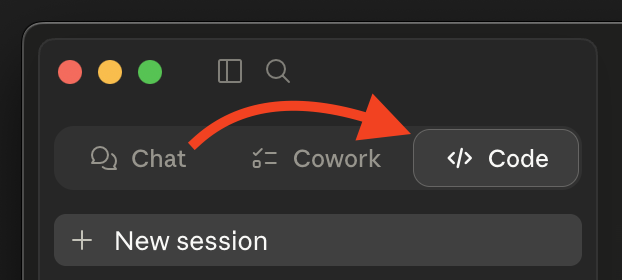
Prefer to do it yourself? See Manual Install below.
Manual Install
Step 1: Find Your MCP Server URL
The URL depends on which AGS edition you're on:
| Edition | URL format |
|---|---|
| Public Cloud | https://{studio}.prod.gamingservices.accelbyte.io/mcp/{studio} |
| Private Cloud | https://{domain}/mcp |
- Public Cloud customers receive a
{studio}namespace at registration — that one value goes in twice, once as the subdomain and once as the path. Studio admins and game admins use the same URL; your assigned roles decide which namespaces you can reach, not the URL you connect to. - Private Cloud customers use their own environment domain, whatever it is — no namespace segment. You may need to coordinate with AccelByte support to enable the MCP endpoint.
"Shared Cloud" is the same thing as Public Cloud — older docs and support threads use that name.
Not sure which edition you're on? Check with your AccelByte administrator.
Step 2: Configure Your Client
The deployed server uses OAuth 2.0 with PKCE and Dynamic Client Registration (DCR). If your client supports DCR, you can connect to the URL directly. If not — or if your client only supports stdio transport — use mcp-remote as a bridge.
Need
mcp-remote? It runs vianpx. You need Node.js 18+ withnpxavailable — verify withnpx --version. Most installers (nodejs.org, Homebrew,nvm, official Windows installer) bundlenpxvianpmautomatically, but minimal Linux distros sometimes ship Node without it; installnpmfrom your package manager if that's the case. No globalmcp-remoteinstall required.
Substitute your URL from Step 1 wherever you see <URL> below.
Visual Studio Code (Copilot)
.vscode/mcp.json in your workspace (or user settings.json):
{
  "servers": {
    "ags-api": {
      "type": "http",
      "url": "<URL>"
    }
  }
}
If you hit DCR errors, swap to: { "command": "npx", "args": ["-y", "mcp-remote", "<URL>"] }.
See the VS Code MCP documentation.
Cursor
.cursor/mcp.json in your workspace (or user settings):
{
  "mcpServers": {
    "ags-api": {
      "type": "http",
      "url": "<URL>"
    }
  }
}
If you hit DCR errors, swap to: { "command": "npx", "args": ["-y", "mcp-remote", "<URL>"] }.
See the Cursor MCP documentation.
Claude Code
claude mcp add --transport http ags-api <URL>
Fallback: claude mcp add ags-api -- npx -y mcp-remote <URL>.
See the Claude Code MCP documentation.
Antigravity
mcp_config.json in your project root:
{
  "mcpServers": {
    "ags-api": {
      "type": "http",
      "url": "<URL>"
    }
  }
}
If you hit DCR errors, swap to: { "command": "npx", "args": ["-y", "mcp-remote", "<URL>"] }.
See the Antigravity MCP documentation.
Gemini CLI
gemini mcp add --transport http ags-api <URL>
Fallback: gemini mcp add ags-api -- npx -y mcp-remote <URL>.
See the Gemini CLI MCP documentation.
Claude Desktop
Claude Desktop has two install paths. Pick the first one that works for your account:
Option A — Custom Connector (recommended for personal / Pro accounts)
- Open Settings → Connectors → Add custom connector (under the "Customize" area).
- Fill in:
- Name:
ags-api - Remote MCP server URL: your
<URL>from Step 1
- Name:
- Save. Claude Desktop handles OAuth (DCR + PKCE) natively — no config file edits, no
mcp-remote.
Don't see "Add custom connector"? Some Team and Enterprise plans disable custom connectors via workspace policy. If the option is missing or greyed out, use Option B.
Option B — mcp-remote config file (fallback when custom connectors are blocked)
Edit claude_desktop_config.json:
- macOS:
~/Library/Application Support/Claude/claude_desktop_config.json - Windows:
%APPDATA%\Claude\claude_desktop_config.json
{
  "mcpServers": {
    "ags-api": {
      "command": "npx",
      "args": ["-y", "mcp-remote", "<URL>"]
    }
  }
}
Restart Claude Desktop after saving.
Step 3: Sign In
When your AI assistant first calls a tool, it will open a browser to AccelByte to complete OAuth. Approve the consent screen and you're connected.
Using the Tools
Once connected, your assistant has access to these tools:
get_token_info
Returns details about your authenticated session — subject, namespace, roles/permissions, token kind, and expiration.
"What's my current user information?"
search-apis
Search AGS operations by description, HTTP method, tags, or service.
"Find APIs for user management" · "Search for inventory endpoints"
describe-apis
Get the full schema for a specific operation — parameters, request/response shapes, auth requirements.
"What parameters does the createItem endpoint need?"
run-apis
Execute an API request. Write operations (POST/PUT/PATCH/DELETE) prompt for consent before running.
"Get my user profile" · "List all items in my inventory"
Analytics & Visualization
The server exposes 16 render tools for turning tabular data into charts, tables, and metrics inside MCP hosts that support app resources:
render_bar_chart,render_line_chart,render_area_chart,render_scatter_chart,render_histogram_chart,render_box_chart,render_heatmap_chartrender_pie_chart,render_donut_chart,render_waterfall_chart,render_funnel_chart,render_gauge_chart,render_state_timeline_chartrender_table,render_metric,render_meter
All render tools require a provider:
provider="facade"reads Athena Facade results byquery_id+namespaceprovider="direct"renders small inline datasets fromdata_columns+data_rows
The typical Athena Facade flow:
- Use
run-apisto submit a query viaPOST /afs/v1/admin/namespaces/{namespace}/queries, preferably withwait_ms=0if you plan to render byquery_id - Poll
GET /afs/v1/admin/namespaces/{namespace}/queries/{id}untilstatus="SUCCEEDED" - Pass that
query_idto arender_*tool withprovider="facade"
If the submit returns 200 with inline rows on the fast path, render those rows directly with provider="direct".
See docs/ARCHITECTURE.md for the render-tool input matrix and the Athena Facade operation list.
Workflow Prompts
The server also provides workflow resources and prompts. Ask your assistant about available workflows or invoke the run-workflow prompt.
Troubleshooting
mcp-remote opens a browser every time
mcp-remote caches tokens under ~/.mcp-auth/. If it's re-authenticating on every launch, that directory may be unwritable or hold stale entries.
First, check permissions on ~/.mcp-auth/ (it needs to be writable by your user). If permissions look fine, the cache may be stale — back the directory up (e.g. mv ~/.mcp-auth ~/.mcp-auth.bak) and retry. Restore the backup if the move doesn't help. Note: removing the cache will sign you out of every MCP server you've authenticated with via mcp-remote, not just this one.
Native config fails with an OAuth or DCR error
Your client may not yet support Dynamic Client Registration. Switch to the mcp-remote fallback config shown above.
Sign-in succeeds but tool calls fail with 403
Your AccelByte user may not have permission for the operation you're calling. Check with your AGS administrator.
Authentication fails with "Invalid Request", "invalid client ID", or "client ID not found"
If your client connected before but now fails at sign-in — often with a generic IAM Invalid Request page mentioning an invalid redirect URI, client ID, or target path, or an "invalid client ID" / "client ID not found" error — the cached Dynamic Client Registration (DCR) is likely stale.
Clients that use DCR cache the IAM client ID they registered. If an administrator or an inactive-client cleanup job later removes that IAM client, the cached registration becomes invalid. The client keeps reusing the deleted client ID and authentication fails before a fresh DCR registration is ever attempted.
This is different from normal token expiry. When only your access token has expired, the client silently refreshes it or reauthorizes against the same valid client ID and you may not notice. A deleted client can't be refreshed — you have to clear the cached registration so the client runs DCR again and registers a new one.
Recovery — clear the cached authentication for the ags-api server, then sign in again:
- Claude Code: run
/mcp, select theags-apiserver, and choose Clear authentication. Then reconnect (via/mcpor by restarting) to trigger a new sign-in. - Codex: run
codex mcp logout ags-api, thencodex mcp login ags-api. mcp-remoteclients: seemcp-remoteopens a browser every time above for clearing the~/.mcp-auth/cache.
Clearing authentication only removes the local OAuth state (the cached registration and tokens) for this one server and requires you to sign in again — it creates a fresh DCR registration and restores access. You do not need to remove and re-add the MCP server, and you should not wipe all MCP credentials globally unless your client offers no way to clear a single server on its own.
Documentation
- Installation Guide — followed by the Quick Install prompt; readable on its own
- Architecture — design, security mechanisms, render tools, AFS operations
- Environment Variables — for self-hosters
- Self-Hosting & Development — build, run, test, deploy with Docker
Looking for V1? See docs/v1/README.md (legacy; stdio + server-managed OAuth).
Contributions
This repository is published as-is. We don't accept external pull requests at this time. For bug reports and questions, please open an issue.
AGS API MCPのよくある質問
このサーバーをローカルにインストールまたは実行する必要がありますか?
いいえ、AccelByteがAGS API MCP Serverをホストしています。AIアシスタントのMCP URLにお使いの環境のURLを指定するだけで利用可能です。
APIクエリの結果をどのように可視化できますか?
このサーバーには16種類のレンダリングツールが用意されており、表形式のデータを棒グラフ、円グラフ、ヒートマップなどのさまざまなチャート、テーブル、メトリクスに変換できます。